
Condensation on windows is a common winter problem in Massachusetts homes. If you are looking for how to stop condensation on windows, the first step is understanding why it is happening in your house. In most cases, moisture forms when warm indoor air hits cold glass and releases water vapor on the surface.
A small amount of window condensation now and then is normal. But if it shows up often, pools on the sill or keeps returning in the same spots, it can lead to real damage. Over time, excess moisture can stain trim, soften wood, and create conditions where mold may grow. It can also signal that your indoor humidity is too high, ventilation is not doing its job, or your windows are no longer insulating the way they should.
This guide explains the causes, what different types of condensation mean and the practical steps that reduce it fast. We will also cover long-term prevention and when replacement is the smarter fix, especially if you are weighing the best replacement windows for an old house.
How to Stop Condensation on Windows: What’s Really Happening
Condensation happens when moisture in the air hits a cold surface and turns into water. In winter, your windows are one of the coldest surfaces in the house. When warm indoor air meets that cold glass, the moisture drops out and you see fog or droplets.
That is why windows show it before your walls do. The glass cools faster, especially on older windows or drafty units.
You will notice it most in places where humidity is higher, like bathrooms, kitchens and sometimes bedrooms overnight. If you are seeing window condensation, it does not automatically mean the window is bad. It usually means the air in your home is carrying more moisture than the glass temperature can handle.
Common Causes of Window Condensation
Condensation usually comes down to one or more of these issues. Some are tied to your indoor environment, others to the window itself.
- High Indoor Humidity. Cooking, showering, drying laundry inside, even breathing all add water vapor to the air. If that moisture builds up faster than your home can vent it out, you get excess moisture and the windows show it first.
- Poor Ventilation. Bathrooms without a working fan, kitchens without a range hood, or homes that stay sealed all winter can trap humid air. When air does not move, moisture hangs around longer and settles where it can.
- Cold Glass From Older Window Construction. Single-pane glass and older aluminum frames get cold fast. That makes the indoor air cool on contact, which speeds up condensation. Homes with older windows often see heavier fogging on colder days for this reason.
- Air Leaks Around Frames. Drafts matter. If cold outdoor air is sneaking in around the sash or frame, that area of glass gets colder than it should. You might notice droplets collecting more heavily along the edges or corners.
- Big Temperature Swings. Massachusetts weather loves to keep you guessing. A mild day followed by a sharp overnight drop can trigger a fresh wave of condensation, especially in fall and early winter when indoor humidity is still high from the earlier months.
- Failed Seals In Double-Pane Windows. If you see fog that will not wipe away because it is trapped between panes, the insulated seal has likely failed. When that seal breaks, the window loses its insulating gas and pulls in humid air. Condensation between panes is a window problem, not a humidity problem.
One quick note that surprises a lot of people: not all condensation is bad. Exterior condensation on the outside of a window can happen when humid outdoor air meets cool glass early in the day. That can actually be a sign the window is doing its job and keeping indoor heat from leaking out.
Types of Window Condensation and What They Mean
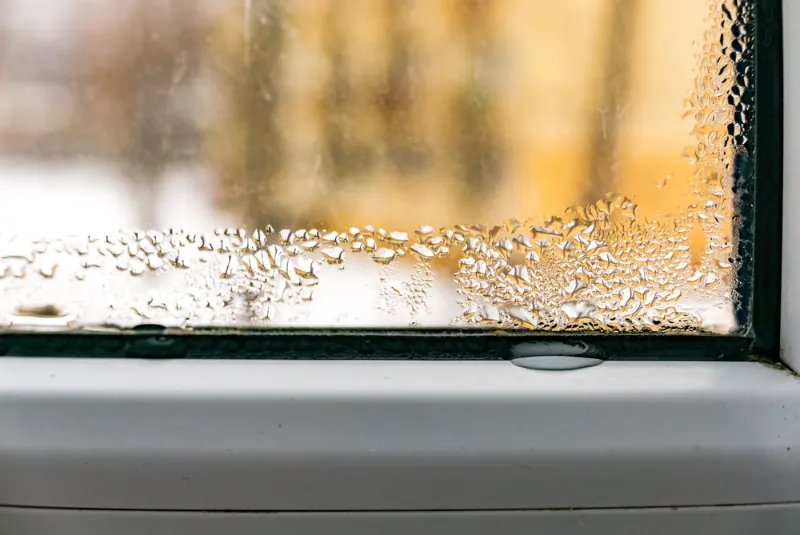
Where the moisture shows up tells you almost everything you need to know about the cause. There are three main types.
Interior Condensation
This is the most common kind. It shows on the room-side of the glass, often as fog, beads, or even light frost on bitter cold mornings.
What it means: Your indoor humidity is higher than what your windows can handle at their surface temperature. That might be because humidity is truly high, ventilation is poor, or the window glass is running cold due to age or drafts.
What to do: In most cases, you focus on controlling humidity and improving airflow. We will walk through quick fixes and longer-term strategies in the next section.
Exterior Condensation
This shows up on the outside of the window, usually early in the morning, and often clears as the day warms.
What it means: Warm, humid outdoor air is condensing on cool glass. If it is happening on newer windows, it typically indicates the window is insulating well and the exterior pane is cooler because less heat is escaping from inside.
What to do: Usually nothing. It is more of a weather event than a house problem.
Condensation Between The Panes
This looks like a cloudy patch or fog sealed inside the glass unit that does not wipe away. Sometimes you will see streaks or a milky haze that comes and goes with the weather.
What it means: The seal on an insulated glass unit has failed. Once that happens, the window’s energy performance drops and moisture gets trapped where it should not be.
What to do: If the seal is gone, no amount of dehumidifying fixes the glass. At that point, replacement is usually the cleanest answer, especially for older houses where you may already be weighing the best replacement windows for an old house.
Immediate Fixes to Reduce Condensation
Let’s start with the things you can do right away. These are low-cost moves that usually make a noticeable dent in window condensation within a few days.
Improve Ventilation Where Moisture Starts
Most indoor moisture comes from a few predictable spots: bathrooms, kitchens and laundry areas. If you cut humidity at the source, less water vapor drifts to your windows.
- Run bathroom fans during showers and for 20 minutes after. If you do not have a fan, crack a window if it is safe to do so.
- Use your range hood when cooking, especially when boiling water or simmering sauces.
- Vent your dryer outside and double check for lint blockages. EPA guidance on moisture control points out that moisture-generating appliances should be vented outdoors whenever possible.
If your fans are noisy or weak, that is often a sign they are underperforming. Replacing a tired bath fan costs far less than repairing a rotted window sill later.
Bring Humidity Down to a Safer Range
In winter, humidity that feels comfortable can still be high enough to fog glass. The EPA recommends keeping indoor relative humidity ideally between 30% and 50% to limit excess moisture and mold risk. Many HVAC pros suggest aiming closer to 30% to 40% in cold months to reduce condensation risk.
A cheap hygrometer from a hardware store tells you where you stand. If you are above that range, try:
- A portable dehumidifier in the rooms that fog the most.
- Turning down or turning off console humidifiers until you find a stable level. Over-humidifying is a common reason condensation spikes overnight.
- Fixing any obvious moisture sources like a damp basement corner or a slow plumbing leak.
Keep Air Moving Across The Glass
Still air lets moisture settle. Gentle circulation keeps the glass warmer and helps humidity disperse.
- Open blinds or curtains during the day so warm room air reaches the window.
- Use ceiling fans on low, clockwise in winter, to push warm air down along exterior walls.
- Move furniture a few inches away from windows so air is not trapped behind it.
Wipe It Down and Watch For Patterns
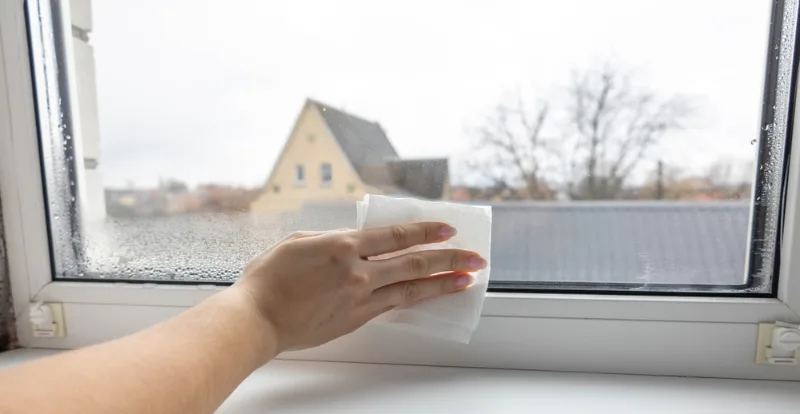
If you are seeing water beads in the same lower corners every day, wipe them dry and keep an eye on whether the pattern changes after you make adjustments. Daily wiping is not a solution, but it does protect wood and paint while you fix the cause.
If you want a simple quick win, even a small shift in humidity plus better airflow solves most interior condensation issues.
Long-Term Solutions to Prevent-Window Condensation
Once you get the situation under control, the next step is making sure it stays that way through the rest of winter and into future seasons.
Seal Drafts and Insulate The Weak Spots
A window that is leaking cold air will keep its glass colder than it should be. That sets the stage for repeated condensation.
- Replace worn weather-stripping on operable sashes.
- Re-caulk gaps where the trim meets the wall or where the frame meets the exterior.
- Check for drafts with your hand on a windy day. If you feel cold air, moisture is not far behind.
For older homes, this kind of tune-up can buy you time, especially if the windows are otherwise in good shape.
Add a Thermal Buffer
If you live in an older house with single-pane windows, your glass is going to run cold. You can add a layer between you and that cold surface.
- Window insulation film kits are inexpensive and work well if installed tightly.
- Storm windows add another layer of glass to trap air cold air and create condensation. ENERGY STAR notes that low-E storm windows can significantly improve winter comfort and insulation.
These fixes help the glass stay warmer, which lowers the chance that indoor air hits its dew point on contact.
Control Humidity For The Whole House
If condensation is showing up on multiple windows, the real issue may be your overall humidity management.
- Make sure your HVAC system is sized correctly, and filters are clean, so airflow stays consistent.
- Consider a whole-home dehumidifier or a heat-recovery ventilator for tighter houses. These systems pull out stale, moist air and bring in fresh air without wasting heat.
- If you use humidifiers for comfort, set them to maintain a winter-appropriate range instead of defaulting to full blast. EPA moisture guidance consistently comes back to keeping indoor humidity in that 30% to 50% range.
Keep humidity points consistent. Homes that swing wildly between dry afternoons and humid nights tend to see the worst fogging.
Know The Limitations of DIY Fixes
Weather-stripping, films and humidity control can do a lot, but they cannot repair a failing window structure. If the frame is warped, the glass seal is gone or the sash is loose in the opening, condensation will keep finding a way back. That’s when it’s time to consider repair vs. replacement.
When Condensation Means It’s Time to Replace Your Windows
Some condensation is part of life in a New England winter. But there are red flags that tell you the window itself is the problem.
Watch for these signs:
- Fog or water between panes that never wipes away. This points to an insulated glass seal failure. Once warm, moist air gets between panes, the unit cannot be restored to its original performance.
- Soft, stained or rotting sills. Repeated moisture exposure can damage wood and invite mold.
- Drafts you can feel even after sealing obvious gaps.
- Sashes that stick, rattle or no longer sit square in the frame.
- A room that feels chilly no matter how high the thermostat is set.
Modern replacement windows are designed to fight condensation on multiple fronts. ENERGY STAR and the Department of Energy highlight a few key features: low-E coatings that reflect heat back into the home, argon gas fills that slow heat transfer and warm-edge spacers that keep the edges of the glass warmer to prevent moisture buildup.
If you are researching the best replacement windows for an old house, those features are worth asking about. They help keep indoor glass temperatures higher, which is the simplest way to reduce condensation risk long term.
How Fisher Windows Can Help
If you have tried the quick fixes and still see heavy condensation or fog between panes, it is time to bring in a pro. Fisher Windows has installed replacement windows in Massachusetts for more than 30 years, so we know what condensation looks like when it is a humidity issue and when it is a window issue.
We start with a free in-home consultation. We look at the windows, the rooms where moisture shows up and the condition of the glass and frames. Then we tell you what we see in plain terms and what it means. No pressure, no guessing.
When replacement is the right answer, we help you choose an energy-efficient window that fits your home and the way New England weather works. Our window replacement services include top-quality products installed by our own experienced crews. We do not use subcontractors because installation is where performance is won or lost. Tight sealing, careful measuring and clean, respectful work are part of every job.
You can read more about our process and what to expect from consultation to final walkthrough. The goal is simple: fix the condensation problem for good and leave you with windows that stay clear, comfortable and efficient through the winter.