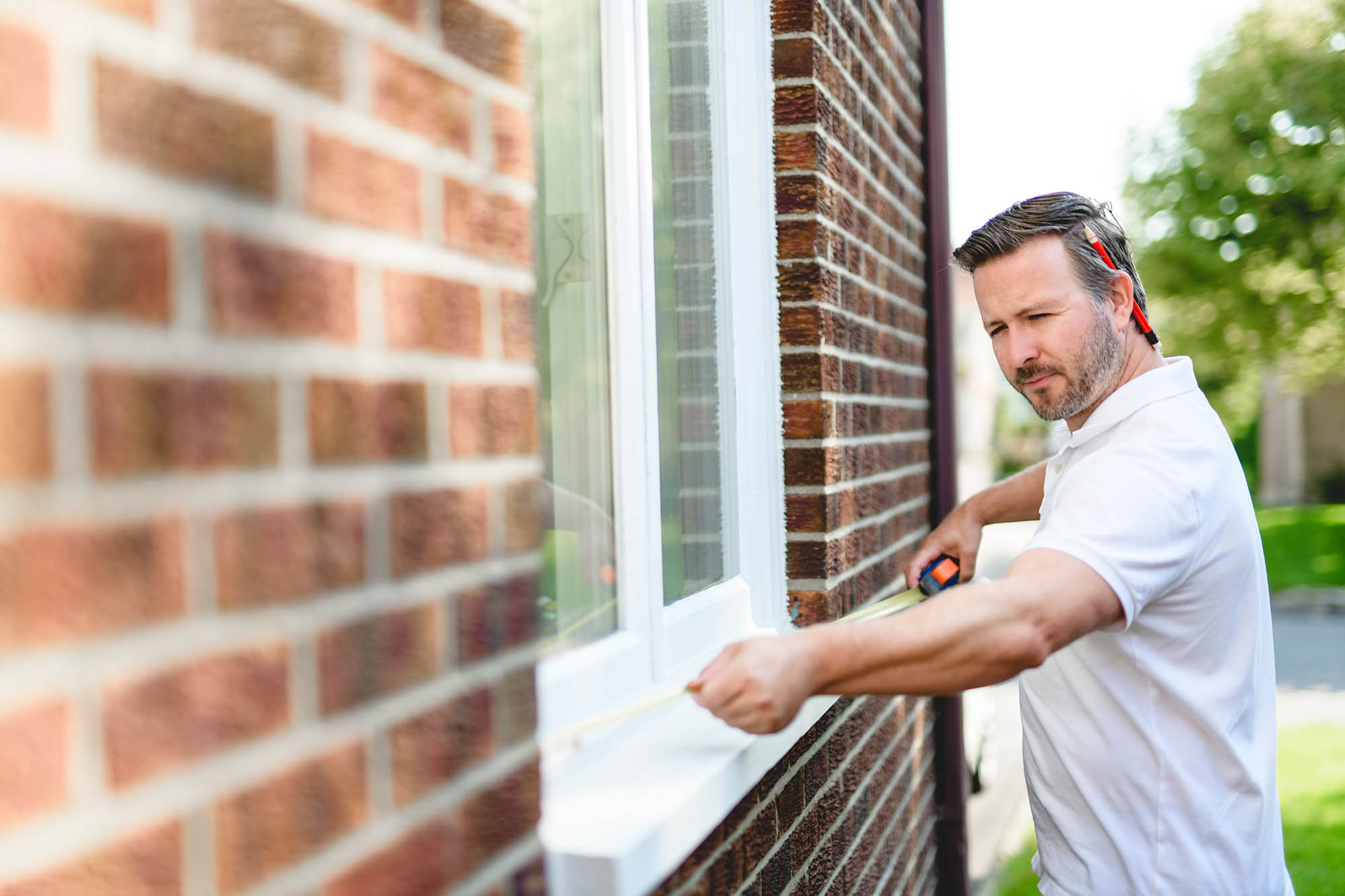
Learning how to measure for replacement windows can help you understand your project before you call an installer. It also gives you a better sense of what may be involved when it is time to order new windows. Still, window measurement is not a place to guess. Even a small mistake can lead to air leaks, poor energy performance, installation delays, and extra costs.
Homeowners can take preliminary measurements on their own, but a professional should verify the final numbers before any replacement window is ordered. This is especially important if you plan to replace several windows at once or compare products from brands such as Andersen, Pella, Marvin, and Harvey. Fisher Windows provides professional measuring and consultation services for homeowners looking to replace their windows.
Why Accurate Window Measurements Matter
Replacement windows must fit the existing opening with precision. The new unit needs enough room for proper placement, insulation, sealing, and smooth operation. If the window measurement is off, the window may be too tight, too loose, or out of square. That can cause drafts, water intrusion, windows that are hard to open or close, and lower energy efficiency.
Accurate window measurements also affect product selection. Different window styles and brands may have different size rules, depth needs, and installation details. The right measurement can also help your installer decide if the project calls for an insert replacement window or a more involved installation. Poor measurements can shorten the life of the window and may create problems with manufacturer warranty requirements. In simple terms, the better the measurement, the better the finished window replacement project is likely to perform.
Tools You’ll Need to Measure a Window
You don’t need a long list of tools to take basic window measurements. Before you start, gather:
- Tape measure: Use a sturdy tape measure that can reach across the full window opening.
- Notepad and pencil: Write down each measurement and label each window by room.
- Ladder: Use one only if the window is hard to reach and the area feels safe.
- Smartphone: Take photos of each window, especially if you see rot, damage, odd trim, or a style that looks different from the others.
How to Measure Window Width
Width measurements affect how the replacement window opens, closes, and seals. If the opening is wider in one spot than another, the new window may not sit squarely in the frame. That can make it harder to operate and may leave small gaps where air or water can get through.
Window width is measured across the opening. In many homes, the opening may look even at first glance, but small changes can appear once you measure in more than one spot. This is common in older homes, homes that have settled, and openings that have been repaired in the past.
- Measure the width at the top of the window opening.
- Measure again across the middle of the opening.
- Measure a third time across the bottom of the opening.
- Write down all three numbers and label them clearly.
- Use the smallest width as the starting point for the replacement size.
Do not round up. If one section is narrower than the others, that smaller number matters. A replacement window sized from a wider measurement may not fit during installation.
How to Measure Window Height
Height is measured vertically inside the window opening. Like width, it should be checked in three places because many openings are not perfectly square. A window can be slightly taller on one side, especially in New England homes that have gone through years of seasonal movement and repairs.
- Measure the left side of the opening, starting at the sill and ending at the top of the opening.
- Measure the center of the opening the same way.
- Measure the right side of the opening.
- Record all three height measurements.
- Use the smallest height when reviewing replacement window size.
Height affects more than fit. It also affects how the window opens, closes, locks, drains, and seals. If the window is ordered too tall, the installer may not be able to set it properly. If it is too short, extra gaps may need to be addressed during installation.
How to Check Window Depth
Window depth is the space inside the frame where the replacement window will sit. Many homeowners measure width and height but forget depth. That can create problems because some replacement windows need a minimum depth to fit, fasten, and seal correctly.
To check depth, measure the inside area of the existing frame across the full depth of the opening. Avoid measuring decorative trim or casing, since those pieces do not show how much room the new window has inside the opening.
Depth matters because the replacement window needs enough space for the frame, hardware, insulation, and sealant. If the opening is too shallow, the window may not sit flush, attach securely, or seal tightly against air and water. Some replacement window products also have minimum depth requirements, so a window that works in one opening may not work in another.
Depth can be harder to judge when there are storm windows, old liners, damaged frames, or layers of past repairs. If the frame is shallow, damaged, or uneven, the installer may recommend a different product or installation approach. A professional installer will verify depth before ordering replacement windows and will note any frame issues that could affect installation.
Common Window Measurement Mistakes
Measuring replacement windows is simple in concept, but several small mistakes can lead to the wrong size. Before you write down final notes, check your work carefully and avoid these common mistakes:
- Measuring only once. Take width and height measurements in three places. One number rarely tells the full story.
- Rounding numbers. Record the exact measurement. Rounding can cause ordering errors.
- Measuring the trim. Interior trim and exterior casing are not the same as the window opening.
- Ignoring window depth. Width and height matter, but depth affects which replacement window can be installed.
- Assuming all windows match. Two windows in the same room may look alike and still measure differently.
Special Considerations for Older Homes
Many homes in Waltham, Greater Boston, and other New England communities have older frames, historic details, and openings that are no longer square. Foundations settle, wood moves with the seasons, and older windows may have been repaired many times. These details can make window measurement more complex.
Historic homes may also need extra care to preserve the look of the home while improving comfort and performance. In some cases, the existing frame may have hidden damage, uneven sills, or old materials that affect the installation plan. A professional evaluation is strongly recommended before replacement windows are ordered for older homes. The goal is to choose the right product, protect the home’s character, and avoid surprises during installation.
When to Call a Professional Window Installer
DIY measurements are useful for planning, but final sizing should be handled by a window professional. This is especially important for large windows, bay and bow windows, historic homes, custom-sized windows, and projects with several windows. Professional measurements also help when comparing replacement windows across brands, since product fit can affect your options.
Fisher Windows brings more than 30 years of window experience to each consultation. The team uses a professional measuring process, reviews the condition of the existing openings, and helps homeowners choose products that fit their home and budget. Fisher Windows does not use subcontractors, so the same focus on careful service carries through the window installation services and our window replacement process.
Schedule a Free Window Consultation
If you are planning a window replacement project, Fisher Windows can help you start with the right measurements. Your free consultation includes professional measuring, expert product recommendations, and an accurate ordering process.
The team serves Waltham and surrounding communities within the local service area, helping homeowners replace windows with less guesswork and fewer delays.
You can also ask about window styles, glass options, frame materials, room comfort, brand choices, and installation timing during the same visit. Request a free consultation with Fisher Windows to get clear guidance before your replacement windows are ordered.
Frequently Asked Questions About Measuring Windows
How accurate do window measurements need to be?
Window measurements need to be exact. Even a small difference can affect how the window fits, seals, opens, and closes. Write down the actual measurement instead of rounding.
Can I measure replacement windows myself?
Yes. Homeowners can take preliminary measurements to plan a project, compare window styles, and understand the scope of work. Final sizing should be checked before any replacement window is ordered.
Do all replacement windows require the same measurements?
No. Different window styles may require different details. Double hung, casement, sliding, bay, bow, and hopper windows can each have special sizing and installation needs.
What happens if window measurements are wrong?
Wrong measurements can cause delays, added costs, air leaks, water problems, and windows that do not open or close correctly. In some cases, the window may need to be reordered.
Does Fisher Windows provide professional measurements?
Yes. Fisher Windows provides professional measurements as part of the consultation process. The team checks the opening, reviews product options, and helps homeowners order replacement windows that fit the project.